The Ka-Blog: Sustainably Sourcing Seafood & Kabobs
At Earth Fare, we consciously choose the best seafood to go from sea to store. Sustainably sourcing our seafood is a critical part of how Earth Fare sets itself apart from other grocers—we choose the best so that you don’t have to think about it.
Sustainable Seafood
Overfishing is the practice of harvesting fish faster than they can reproduce. This practice is extremely harmful as it triggers extinction, damages habitats and ecosystems, and has negative effects on nearby communities. (4) Larger fish, like cod and snapper, take longer to grow and reproduce, making them more endangered by overfishing.
Once these larger fish become inaccessible, fishermen gravitate toward smaller fish at the bottom of the food chain, further disrupting predator populations. With an increase in seafood demand, it is important that fisheries avoid this practice to ensure the longevity of species for future generations.
What’s in my Seafood?
The answer should be simple: just seafood.
Many fish farmers inject antibiotics and hormones into seafood to enhance the color, control disease, and preserve shelf life, stripping the product from its natural micronutrients and fatty acids. To ensure that your seafood product is free of this process, look for labels that read “all-natural” or are certified under the Department of Agriculture, Forestry and Fisheries, or The Consumer Goods Council of South Africa. Canned or prepackaged products are also something to avoid, due to their high levels of sodium. (2) Sodium tripolyphosphate (STPP), an inorganic preservative, is added to seafood and poultry to give older fish a fresher appearance, making it look glossier and firmer. In addition to being added to food products, it is also commonly found in laundry and dishwasher detergents. (6) According to The American Heart Association, excess amounts of sodium can provoke health issues such as an enlarged heart, kidney disease, and high blood pressure. (3) Choosing “all-natural” seafood products and eliminating canned and prepackaged items can help prevent health concerns and keep harmful chemicals out of your body.
From Spear to Skewer
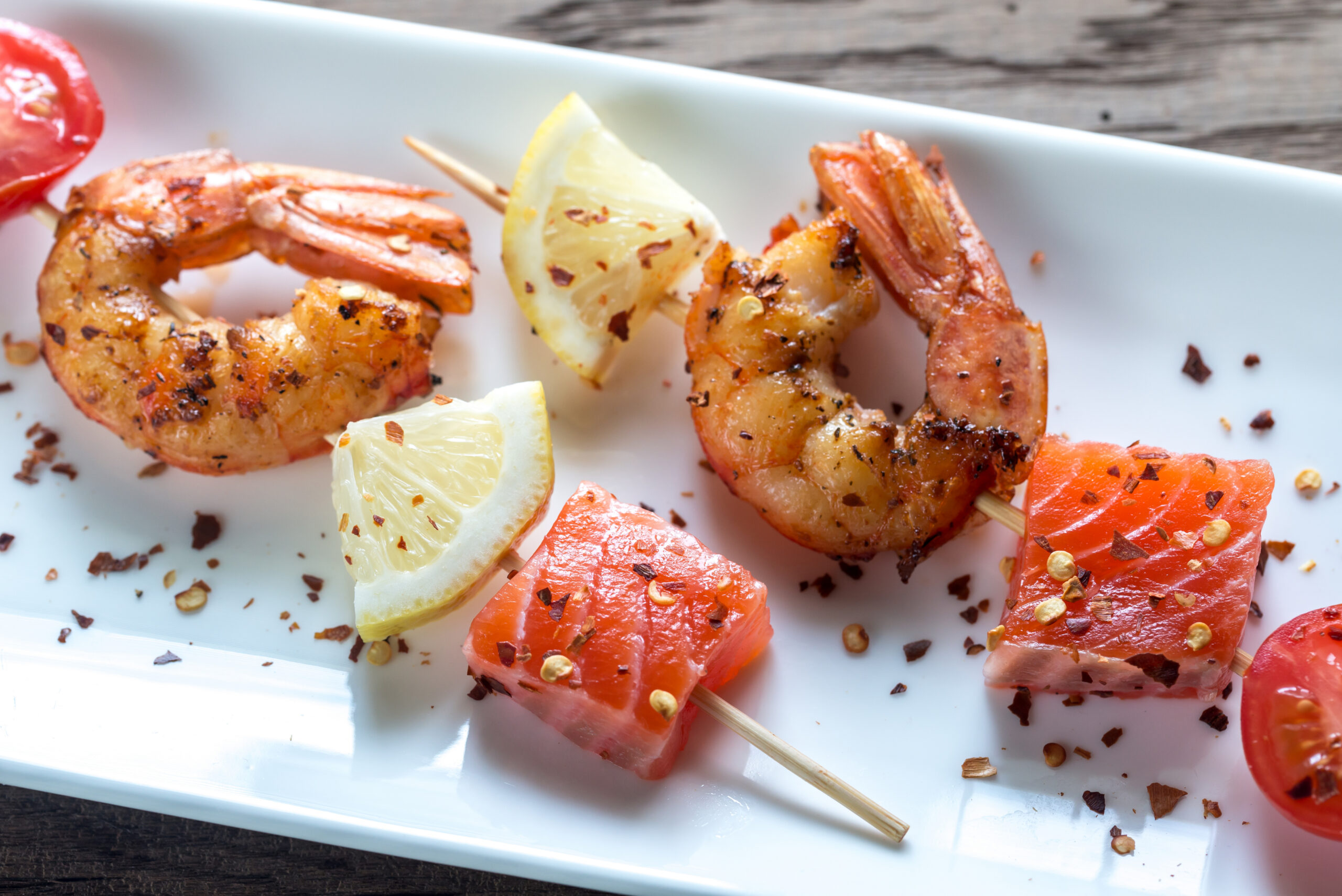
Using the freshest, all-natural seafood from Earth Fare, grill up a savory seafood kabob to make your dinner-time feel like island-time. Grab your choice of shrimp, scallops, or fish and sear them to perfection. Throw in pineapples, red bell peppers, onions, and other fruits and veggies on the grill. Instead of using a wooden skewer, switch to a metal one for reusability and to avoid wood splinters in your food. Top your skewers and let the flavors do the talking.
Don’t like kabobs? Toss the same ingredients over fluffy coconut rice and enjoy a tropical inspired bowl.
SOURCES:
- https://www.inlandfoods.com/sustainability
- https://tequisa.co.za/seafood-additives-and-common-seafood-additives/
- https://www.heart.org/en/healthy-living/healthy-eating/eat-smart/sodium/effects-of-excess-sodium-infographic#:~:text=Excess%20levels%20of%20sodium%2Fsalt,Osteoporosis
- https://www.seafoodwatch.org/seafood-basics/sustainable-solutions/avoid-overfishing#:~:text=What%20is%20overfishing?,%2C%20reduce%2C%20and%20stop%20overfishing.
- https://www.fisheries.noaa.gov/southeast/bycatch/turtle-excluder-devices#:~:text=Turtle%20excluder%20devices%2C%20commonly%20called,neck%20of%20a%20trawl%20net.
- https://thefishsite.com/articles/warnings-of-sodium-tripolyphosphate-in-fish
JOIN OUR NEWSLETTER
Receive special promotions, coupons, and updates on our special events.